
In the ever-evolving landscape of artificial intelligence, a new player has emerged that promises to reshape the future of image generation. Flux.1, developed by the innovative team at Black Forest Labs, is making waves in the tech community with its impressive capabilities and open approach to AI development.
The Visionaries Behind FlUX.1: Black Forest Labs
At the heart of Flux’s development is a team of AI pioneers with a proven track record in revolutionizing image generation technology. Black Forest Labs (BFL) was founded by former key developers of Stability.ai, including Robin Rombach, Patrick Esser, and Andreas Blattmann. This team played a crucial role in creating the groundbreaking Stable Diffusion models that have become synonymous with AI image generation.
Image Generation – The hottest AI tools in image generation.
“Our innovations include creating VQGAN and Latent Diffusion, Stability AI’s Stable Diffusion models for image and video generation (Stable Diffusion XL, Stable Video Diffusion, Rectified Flow Transformers), and Adversarial Diffusion Distillation for ultra-fast, real-time image synthesis,” the team stated in their announcement.
The founders’ journey in AI is as fascinating as it is impressive. Their work on latent diffusion models at CompVis (Computer Vision and Learning at LMU Munich) and RunwayML laid the groundwork for Stable Diffusion. Collaborations with LAION and EleutherAI further honed their expertise before they joined Stability.ai, where they made significant contributions to the open-source image generation community.
However, the story took an unexpected turn. Amid reports of financial struggles and internal challenges at Stability.ai, including dwindling cash reserves and fundraising difficulties, the team decided to chart their own course. This decision was also influenced by concerns about how their contributions to Stable Diffusion were being presented.
In 2023, backed by a substantial $31 million seed funding round led by Andreessen Horowitz and supported by notable investors including Brendan Iribe, Michael Ovitz, and Garry Tan, Black Forest Labs was born. The company’s mission: to continue pushing the boundaries of generative AI while maintaining a commitment to open-source principles that made their previous work so impactful.
FLUX.1: A New Benchmark in AI Image Generation
FLUX.1 represents a significant leap forward in the field of text-to-image AI models. With a staggering 12 billion parameters, it’s the largest open-source text-to-image model to date, challenging established platforms like Midjourney and Stable Diffusion. FLUX.1 comes in three variations:
- FLUX.1 [Dev]: is an open-source, streamlined model for non-commercial use. Derived from FLUX.1 [pro], it offers comparable quality and prompt accuracy, with enhanced efficiency. Try FLUX.1 [dev] on HuggingFace, Replicate, or fal.ai.
- FLUX.1 [Schnell]: the speediest model, is ideal for local and personal projects. It’s open-source with an Apache 2.0 license. Access weights on Hugging Face and find code on GitHub. Try FLUX.1 [Schneel] on HuggingFace, Replicate, or fal.ai.
- FLUX.1 [Pro]: state-of-the-art performance image generation with top of the line prompt following, visual quality, image detail and output diversity. We are slowly ramping up our inference compute for FLUX.1 [pro] in our API. Try Flux.1 [Pro] at Replicate, or fal.ai.
What sets FLUX.1 apart is not just its cutting-edge performance, but also its commitment to accessibility and open-source development. The architecture behind FLUX.1 pushes the boundaries of what’s possible in AI-generated imagery, employing advanced techniques that contribute to exceptional output quality and diversity.
Benchmarking FLUX.1: Setting New Standards
In benchmarking tests, FLUX.1 has set new standards in image synthesis, surpassing models like Midjourney v6.0, Dall-E 3 (HD), and SD3 Ultra in visual quality, prompt following, size/aspect variability, typography, and output diversity. Black Forest’s data suggests that its Pro and Dev models are currently the best image generators available, with even the less powerful Schnell ranking between Midjourney v5 and Ideogram.
Our own tests comparing FLUX.1 against other prominent open-source image generators like SD3 Medium and Auraflow, as well as the industry-leading Midjourney, have confirmed these impressive capabilities. Across various prompts testing illustration skills, spatial awareness, and photorealism, Flux consistently delivered superior results.
Illustrations: Bringing Imagination to Life
When tasked with creating a hand-drawn illustration of a big cat chasing a woman in the city, FLUX.1 demonstrated its prowess in atmospheric lighting, shadow work, and conveying emotion through imagery.
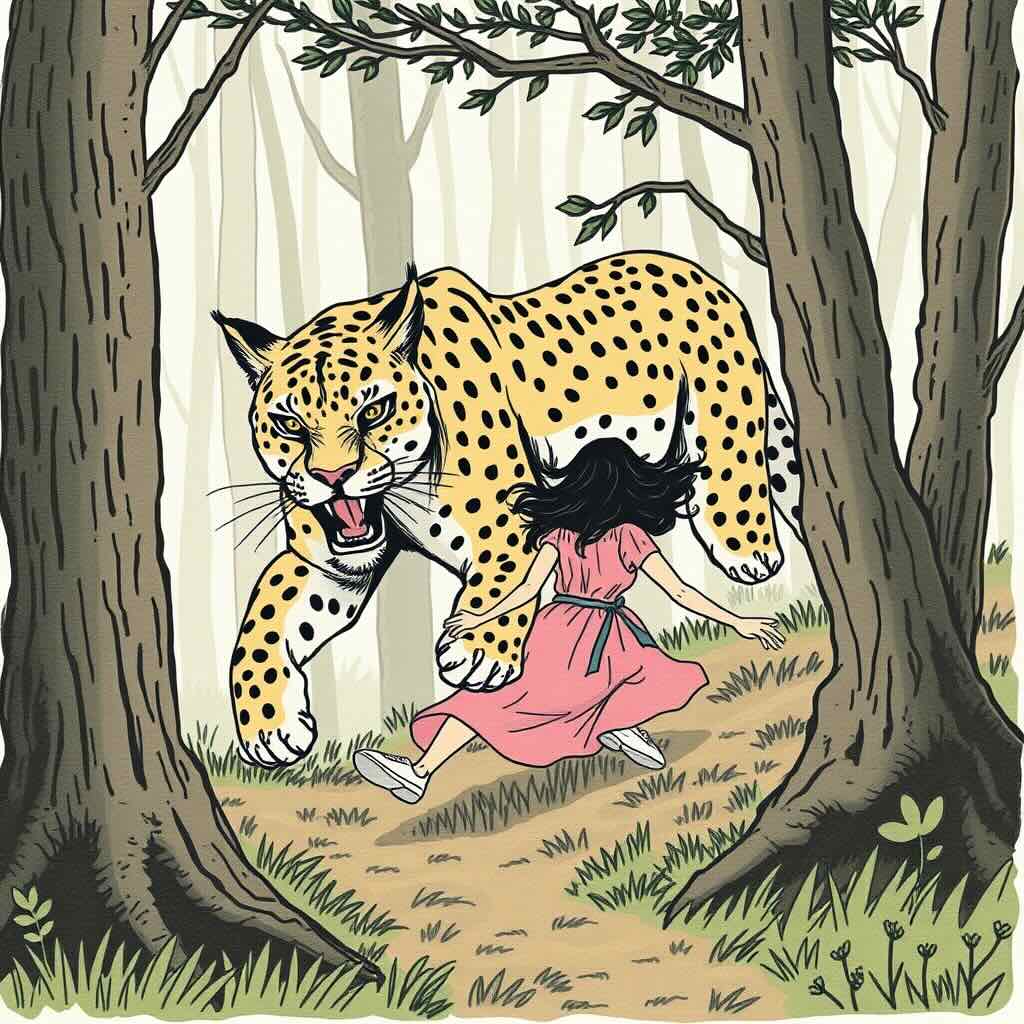
Prompt: Hand-drawn illustration of a big cat chasing a woman in the forest [flux-schnell on Replicate]
FLUX.1 showed an excellent use of atmospheric lighting and shadows. The spider’s design was truly menacing, with sharp legs and a frightening face. The woman’s vulnerable posture conveyed anguish well, and it was the most accurate representation of anatomy among the three models tested.
Spatial Awareness: Mastering Complex Scenes
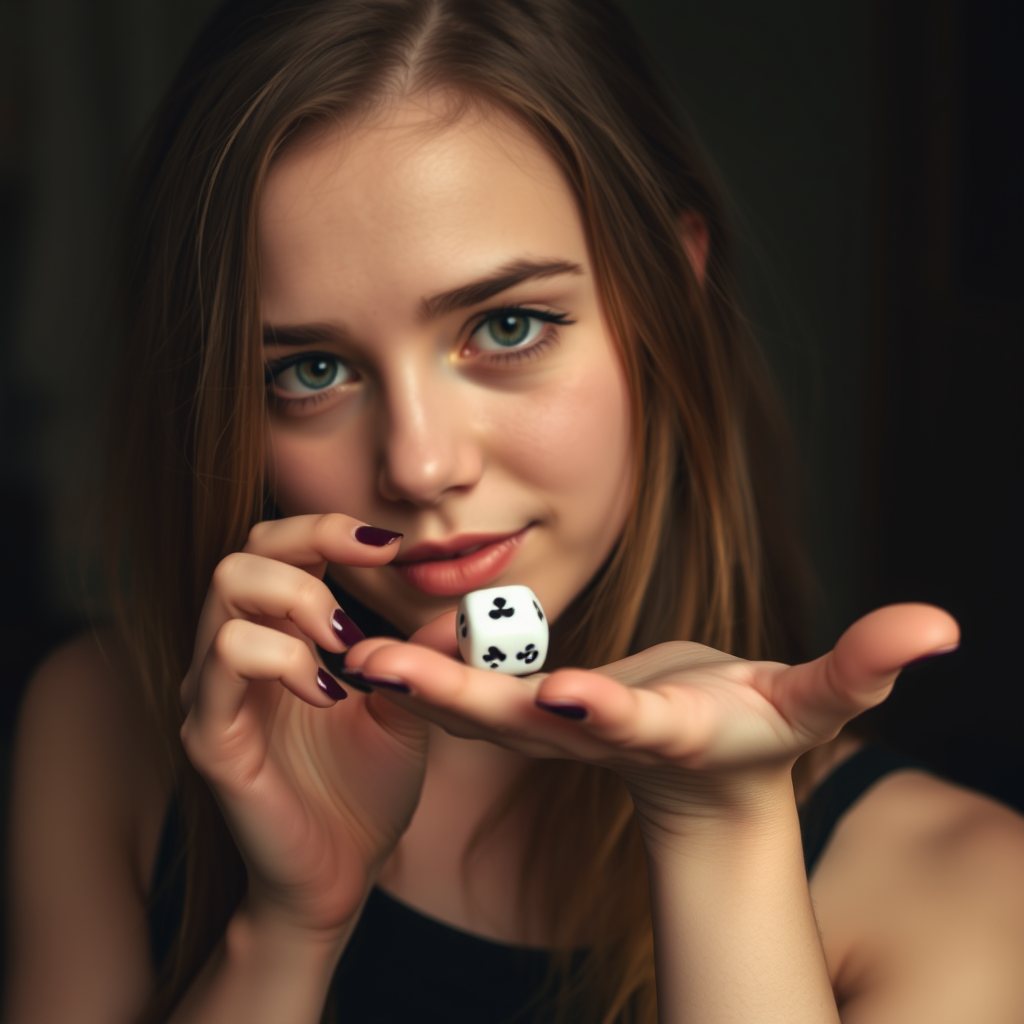
FLUX.1’s ability to handle complex spatial relationships was put to the test with a prompt involving a dog on a skateboard on car roof, a woman holding a dice, and a robot on a table in a dive bar. The results were impressive, showcasing Flux’s understanding of spatial relationships and attention to detail.

Prompt: 1950’s robot dancing on top of table with messy beers and food all over the place in a dive bar with neon lights [flux-schnell on Replicate]
Prompt: 1950’s robot dancing on top of table with messy beers and food all over the place in a dive bar with neon lights [flux-schnell on Replicate]
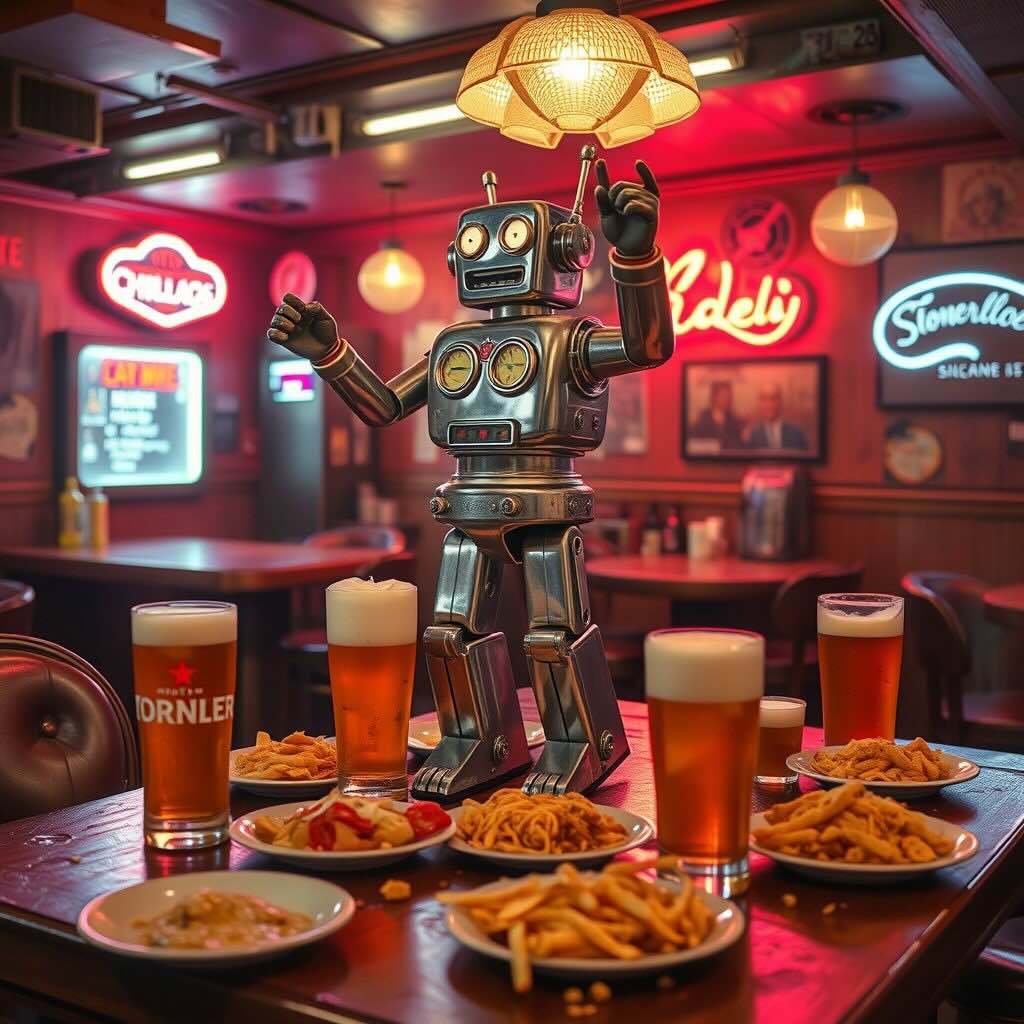
Prompt: 1950’s robot dancing on top of table with messy beers and food all over the place in a dive bar with neon lights [flux-schnell on Replicate]
FLUX.1 most closely matched the prompt’s requirements, featuring all the elements in the required positions. The composition was well-balanced, and the unexpected placement of elements enhanced the surreal quality requested in the prompt.
Realism: Capturing the Essence of Reality
In creating a bustling city street at night, FLUX.1 demonstrated its capability to generate hyper-realistic scenes with intricate details, accurate lighting, and believable human figures.
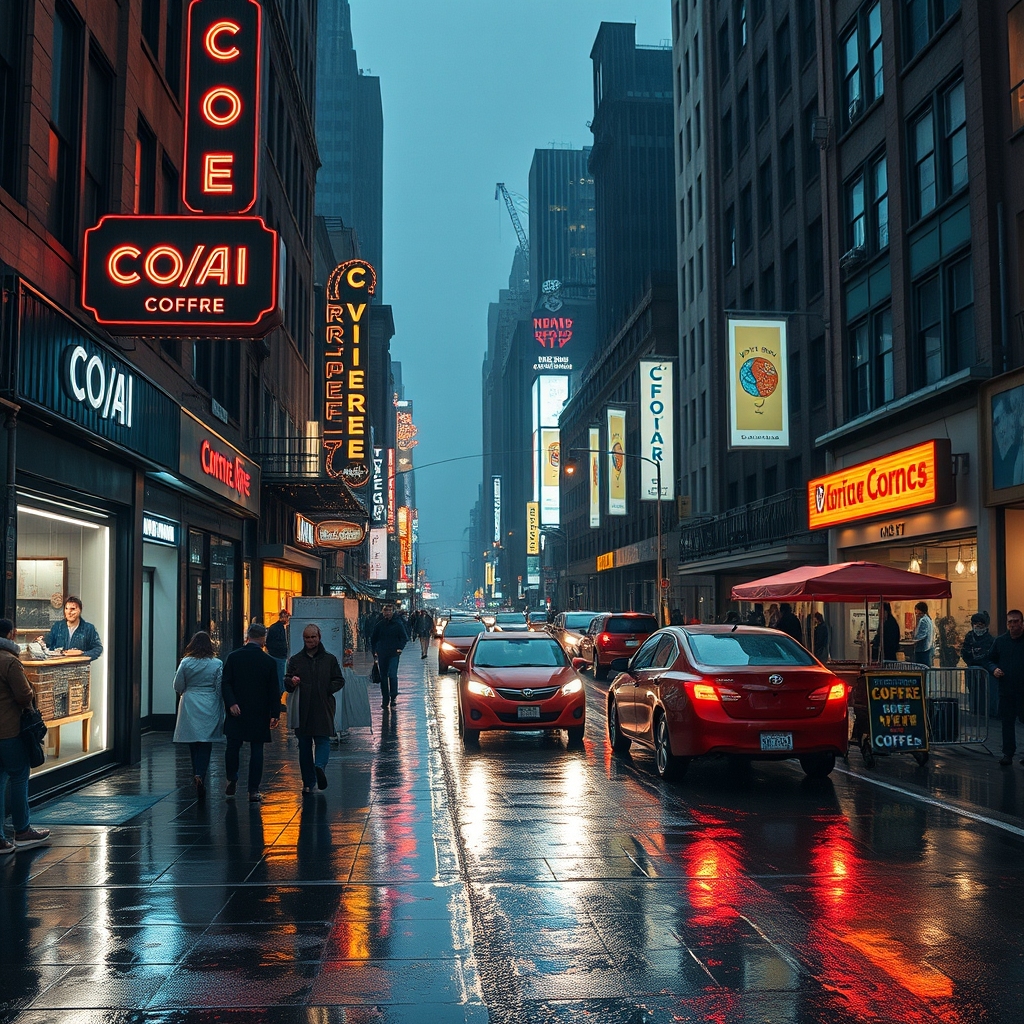
Prompt: A high-resolution photograph of a bustling NYC street at night, raining, neon signs illuminating the scene, people walking along the sidewalks, cars driving by, a street vendor selling coffee, reflections of lights on wet pavement, the overall style is hyper-realistic with attention to detail and lighting, a neon sign says CO/AI. [flux-schnell on Replicate]
FLUX.1 closely matched the prompt’s requirements, featuring a bustling city street at night with neon signs illuminating the scene, people walking along the sidewalks, and cars driving by. The reflections of lights on the wet pavement were realistic, and the requested “CO/AI” sign was prominently displayed.
FLUX.1 vs. Midjourney: A New Challenger Emerges
To truly test FLUX.1’s capabilities, we pitted it against one of the industry leaders, Midjourney. Using prompts from Midjourney’s top picks, we compared the outputs side by side.
Photorealistic Portraits
When tasked with creating a black and white photo of a woman in an all-black outfit, both models produced striking results, but with notable differences in interpretation and execution.
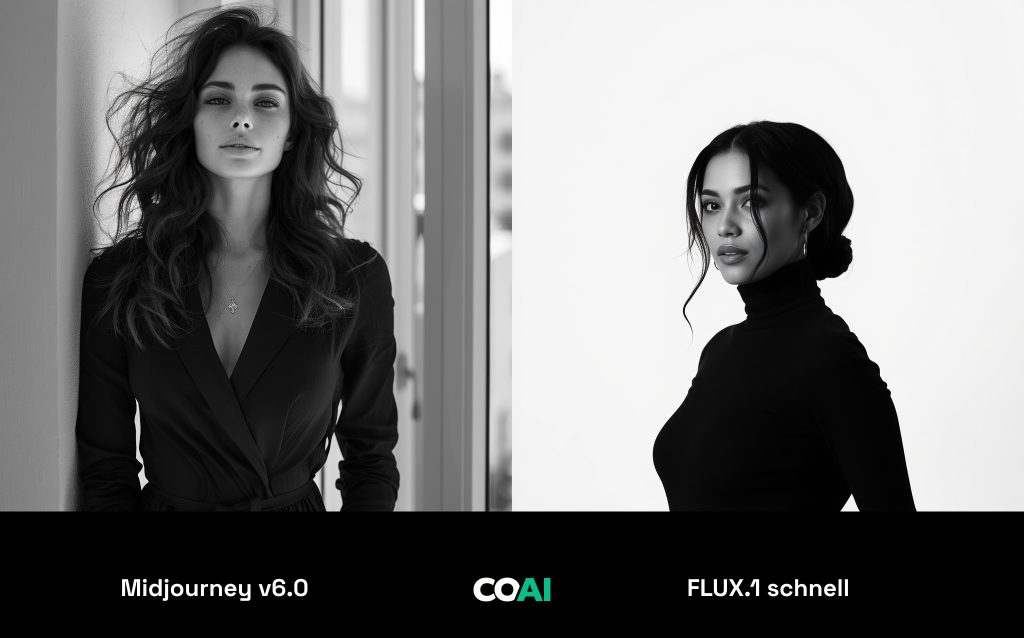
FLUX.1 captured the main elements of the prompt with a balanced composition. The woman standing and staring at the view in a more relaxed and natural pose. The high precision in rendering facial features, hair, and clothing contributed to a realistic appearance. While there were minor visual differences, they FLUX.1 model’s face had more detail in Midjourney’s output.
Whimsical Scenes
The prompt for a white dog DJ while wearing sunglasses, a hat, and a Hawaiian shirt showcased each model’s ability to blend realism with fantastical elements.
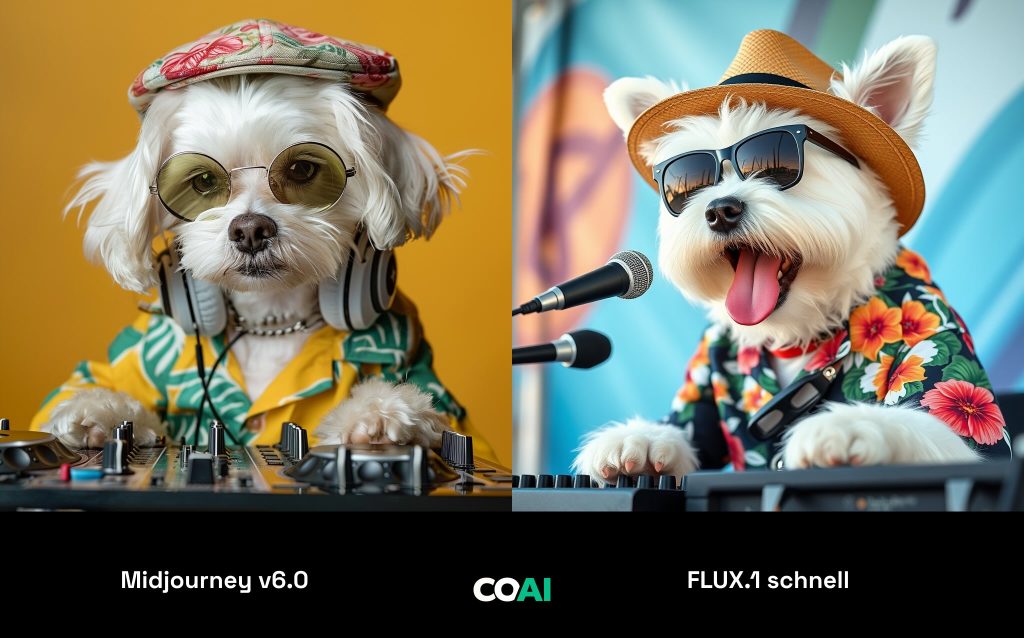
FLUX.1 delivered a closer adherence to the prompt with upper body shot of the white dog as a DJ, capturing all the elements requested. While the image was highly detailed and accurate, it may have lacked some of the immediate charm and expressiveness of Midjourney’s close-up version.
Democratizing AI Image Generation
One of the most exciting aspects of FLUX.1 is its potential to democratize high-quality AI image generation. While the Pro version caters to commercial applications with enhanced features, the open-source Dev model provides similar capabilities for non-commercial use. This approach allows researchers, hobbyists, and small businesses to explore and harness the power of a 12 billion parameter architecture, fostering innovation and creativity across various sectors.
The accessibility of FLUX.1 extends beyond just its open-source nature. Its integration into creative platforms like NightCafe and Poe further expands its reach, allowing a wider audience to experiment with state-of-the-art AI image generation.
However, the sheer size of the model (around 23GB) means that users with smaller GPUs may face challenges running it locally. To address this, Black Forest Labs has partnered with Fal AI to support cloud generations, making the technology accessible to a wider audience.
The Economics of AI Image Generation
FLUX.1’s pricing model stands out in the competitive landscape of AI image generation. At $1 for 33 images with FLUX.1 Pro or 333 with FLUX.1 Schnell (after a free daily quota), it offers a compelling value proposition compared to established players like Midjourney and Leonardo. This competitive pricing, combined with FLUX.1’s superior performance, could potentially disrupt the market and drive further innovation in the field.
Ethical Considerations and Responsible AI
As with any powerful AI tool, the developers of FLUX.1 have placed a strong emphasis on ethical use. While the model offers a degree of “uncensored” capabilities, it’s implemented with a “safety” slider on platforms like Replicate, allowing for responsible use of the technology. This commitment to responsible AI deployment is crucial as we navigate the complex intersection of technology and society.
Looking to the Future
The emergence of FLUX.1 signals an exciting new chapter in AI image generation. Its ability to handle complex compositions, render accurate human anatomy, and adhere precisely to prompts sets a new benchmark in the field. As the technology continues to evolve, we can expect to see even more impressive capabilities and applications.
Black Forest Labs’ approach of combining open-source development with a sustainable business model through paid API access and custom enterprise solutions could set a new standard in the AI industry. It demonstrates a path forward that balances innovation, accessibility, and commercial viability.
As FLUX.1 continues to develop and find its place in the AI ecosystem, it’s clear that we’re witnessing a significant moment in the evolution of creative AI tools. Whether you’re a professional designer, a hobbyist artist, or a tech enthusiast, Flux represents an exciting new frontier in the world of AI-generated imagery. With the expertise and vision of the Black Forest Labs team behind it, the future of visual creativity is not just here—it’s more accessible, more powerful, and more promising than ever.
More like this
Which Job Gets Its 1000X Next
Somewhere out there is a developer shipping in a week what used to eat a team for a...
Treebeard Is Waking Up To AI
There is a particular kind of person you learn to distrust in business: the one who urges everyone...
Claude 5 Fable Vibe Check: Anthropic Opens the Door to a Mythos-Class Model
On June 9, 2026, Anthropic did something it had spent two months publicly hesitating to do: it put...